Curriculum
Introduction
The school curriculum is built upon a model produced collaboratively by schools within The Oak Partnership Trust.
The Oak Partnership Curriculum will promote learning through:
- the planned classroom curriculum
- school culture and ethos
- the wider school day (break time, lunchtime, collective worship, before and after school)
- relationships and expectations
- the hidden curriculum*
*We use the term hidden curriculum to describe the non-academic learning promoted by schools, through the attitudes, values and culture of the school, the physical environment of the school, the social environment of the school, the unconscious and unintended teaching that occurs in the classroom.
Our Curriculum Model
The key reasons underpinning the design of our Curriculum Domains model are:
- to address the marginalisation of some areas such as arts, PSHE and humanities.
- to ensure that the focus on spoken language and oracy is strengthened.
- to build on learning in the Early Years Foundation Curriculum.
- to move curriculum planning away from subject timetabling and encourage thinking about which aspects might be taught separately and which combined.
- to include nationally determined progressions from the National Curriculum but provide space for locally determined needs to be addressed within these progressions.
- to promote flexible implementation and creativity in each school.
- to support teachers to guard against curriculum overload.
- to uphold and strengthen the interconnectivity between curriculum areas.
Curriculum Domains
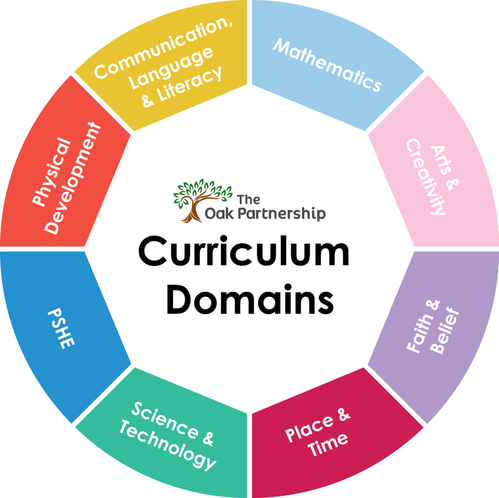
Each domain is led by a member of the teaching team at the school, and these leaders develop and make improvements to their domains with support from the school Curriculum Manager, Keira Hayden, and Trust Domain Leaders.
Click on the links at the top of this page to find out more about teaching and learning within each of the Curriculum Domains. Your child's class teacher is the first point of contact if you have further queries about our curriculum. The school's accessibility plan can be found on the Trust website.
Knowledge & Skills Progressions
Assessment
Assessment plays a central role in securing high‑quality teaching and learning at West Monkton. Our approach is rooted in the principles set out in the Trust’s Assessment Policy, which emphasises clarity, fairness and the use of assessment to improve learning rather than to merely measure it. Formative assessment is embedded in everyday practice: teachers use questioning, live feedback, modelling and success criteria to help pupils/learners understand where they are in their learning, what success looks like and what they need to do next. Alongside this, we use a range of summative assessments each term to evaluate attainment and identify emerging gaps. Standardised tests such as NFER are used intelligently: not simply as performance measures but as diagnostic tools that help teachers refine planning, strengthen curriculum design and provide targeted support. By combining formative insight with carefully interpreted summative data, we ensure assessment remains purposeful, proportionate and closely aligned with our commitment to equity and high expectations for all pupils/learners.