Year Five
Welcome to Year 5
2026 - 27
Welcome to our Year 5 class page. We will be updating our class stories regularly to share with you the engaging work we are completing in year five.
This year, our Y5 staff includes:
Buzzard Class - Mr Smart, Miss Brooks, Mrs Walker, Mrs McBride, Mr Souster
Magpie Class - Mrs Ward, Mrs Reading, Mrs Walker, Mrs McBride, Mr Souster
We will also have the following teachers working with us over the year:
PE Specialist- Mrs Nicholas
Music Specialist- Mrs Heap (autumn 1, spring 1, summer 1)
Useful Class Information
Drop off and pick-up:
The school gates will open at 8.45am for registration at 8.55am. We expect for children to be in the classroom, ready for learning by 8.55am. Pick-up time is 3.15pm. If you would like your child to walk home independently, please pick up a form from the office which allows you to give permission for this to happen.
P.E:
P.E will be taught this half-term by Mrs Nicholas which will be on Friday. Please ensure that children come to school dressed in their PE kit. We will aim to be outside, weather dependent, so please make sure that your child is suitably dressed.
Reading:

Oxford Reading Buddy:
We are delighted to tell you that our school uses Oxford Reading Buddy. This is a digital reading service to support children’s reading development at home and at school. It contains hundreds of digital books and book-quizzes all matched to each child’s reading ability. Please log in to Oxford Reading Buddy. Your child has their password in the back of their home-school learning journal. If you don’t have a tablet or PC at home the service works on smartphone as well. For more information go to this address and choose Parent Support: https://support.oxfordreadingbuddy.com/
Your child will also be given a physical copy of a book. This can be looked through when completing their quiz.
In year 5, children should be reading at home five times over a week. We also read every day in school between 8.45-9.15am. This is where children are able to read their book, complete a quiz and change their book once they’ve completed it.
Teachers keep track of individual scores and move on and/or support where necessary. When children complete a quiz, it gives teachers an analysis in how pupils have performed in certain areas such as finding information, making connections and using inference or understanding vocabulary. Teachers can then support appropriately.
The scheme goes up to level 20 which is aimed at Y6 greater depth readers.
Homework:
Homework will be set on a Friday, this could be maths, CLL or topic. This needs to be returned the following Thursday. A copy of the homework will be inserted below on this webpage.
Water bottles/snacks:
Children are encouraged to drink plenty of water throughout the day to keep well hydrated. We ask that each child brings to school a named water bottle and a healthy snack (fruit,veg, cereal bar etc) to school. Please remember that we are a nut-free school.
Communication:
If you need to communicate anything to staff, please contact us (through email or telephone) via the school office. Alternatively, you may be able to speak with a member of the team during pick-up time.
Best wishes,
The Year 5 Team
 Autumn Term 1
Communication, Language and Literacy

Year 5 CLL Unit: Mission to Mars!
Genre: Diary Entries
In this Year 5 writing unit, pupils will explore Markus Motum’s Curiosity as inspiration for imaginative diary writing. Using the story of the Curiosity rover and its journey across Mars, pupils will step into the role of a character involved in the mission and develop their understanding of first-person narrative, emotion, atmosphere and perspective.
Across the unit, pupils will plan, draft, edit and publish their own diary entries, drawing on the rich visual storytelling and scientific themes within the book. They will consider how a character might feel at significant moments, select precise vocabulary, vary sentence structures and use descriptive language to create a convincing voice.
The unit will culminate in pupils producing polished diary entries that combine creative writing with scientific understanding, giving them an opportunity to communicate the excitement, uncertainty and wonder of exploring another planet.
STEM (Science) Earth and Space
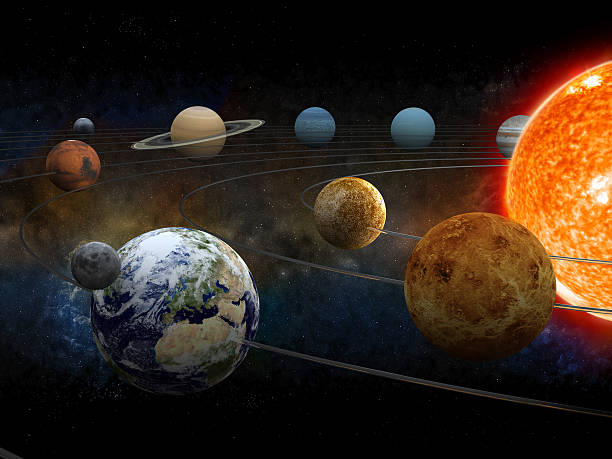
In science, Year 5 pupils will investigate the fascinating topic of Earth and Space. They will learn about the movement of the Earth, Moon and other planets within our solar system, developing an understanding of how these movements create: day and night, seasons and the apparent movement of the Sun across the sky.
Pupils will explore our solar system, identify the planets and discover how they differ in size, position and movement. They will use models, observations and scientific enquiry to investigate ideas and develop their understanding of space.
Throughout the unit, children will build their scientific vocabulary, ask questions, make predictions, interpret evidence and explain their ideas using increasingly precise scientific language.
Place and Time (Geography)
In this Geography unit, Year 5 pupils will explore the fascinating world of deserts and investigate what it is really like to live in one of the driest environments on Earth.
Pupils will locate and compare deserts around the world, explore their climate, landscapes and physical features, and discover how plants, animals and people have adapted to survive in challenging conditions. They will investigate how communities make use of limited resources and consider how people live, work and adapt to their environment.
Through maps, photographs, data and geographical enquiry, pupils will develop their skills in locating places, interpreting information, identifying patterns and explaining geographical processes.

Maths:
The key areas being taught over this term will include:
- Roman numerals
- Place Value
- Rounding
- Ordering
Children will also have a two-minute times table check on a daily basis. This term we will be focusing on x10 and x5.
Jigsaw (PSHE):
In our first Jigsaw unit, Being Me in My World, Year 5 pupils will explore their identity, strengths and aspirations as they begin to think about their place within their class, school and wider community.
Children will consider what it means to belong, take responsibility and make positive choices, while developing an understanding of how their actions can affect others. They will explore the importance of working together, listening to different viewpoints and creating a supportive and respectful classroom environment.
Through discussion, reflection and collaborative activities, pupils will develop their self-awareness, confidence and sense of responsibility, setting goals for the year ahead and considering how they can contribute positively to their school community.

 Faith and Beliefs:
In Faith and Beliefs, Year 5 will be exploring the question, What Does it Mean to be a Humanist in Britain Today? Children will learn about Humanism and its core beliefs, including the importance of reason, compassion and making ethical choices based on evidence and human experience. They will research influential Humanists and investigate how their ideas have influenced society. Pupils will also explore how Humanists mark important life events, including weddings, naming ceremonies and funerals and compare these celebrations with those of religious traditions. Through discussion and enquiry, children will develop their understanding of different worldviews and reflect on what gives meaning and purpose to people's lives.
Homework: